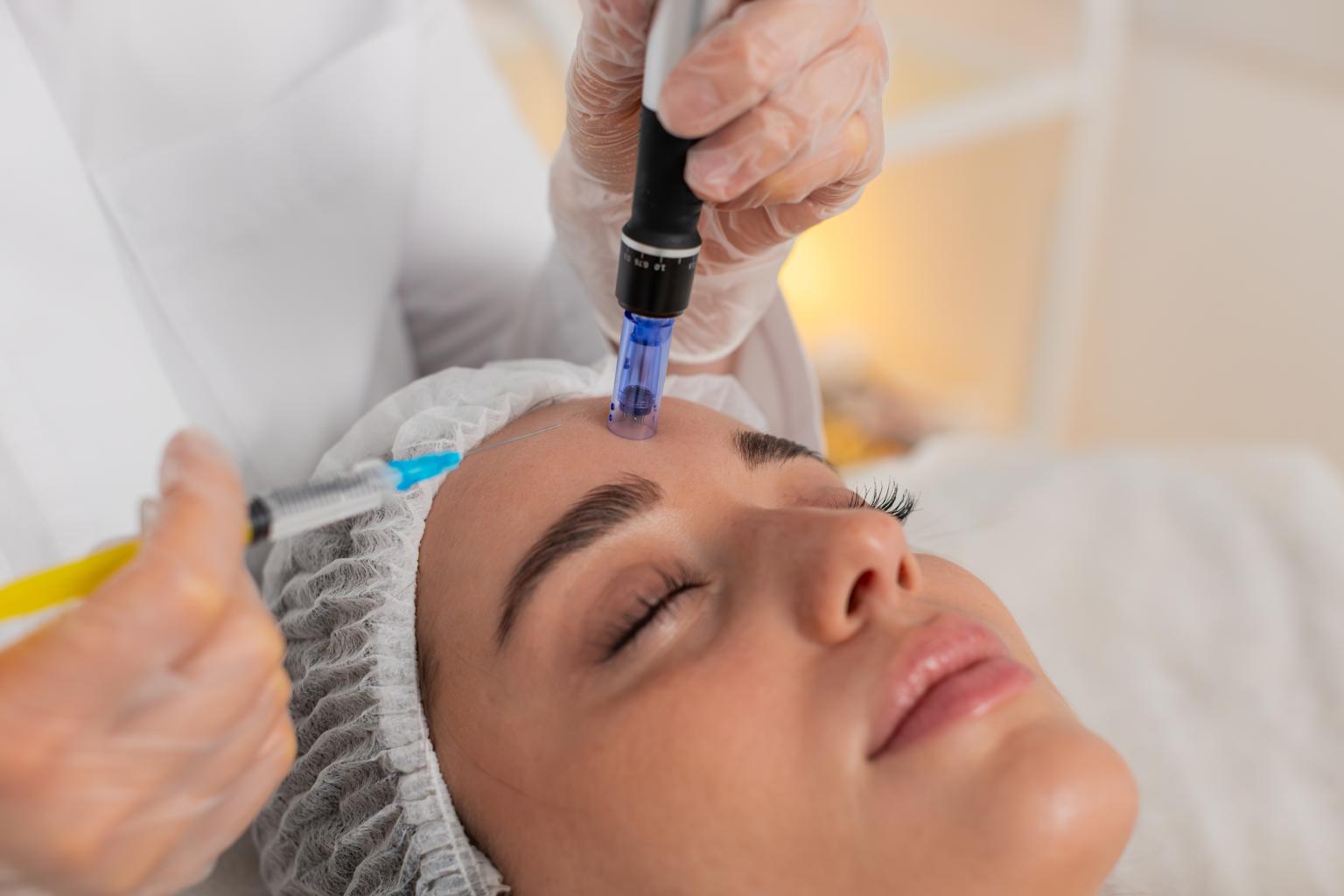
Understanding two treatments designed to improve skin quality and stimulate collagen.
Patients exploring skin rejuvenation treatments often encounter two commonly discussed options: PRP and microneedling.
Both treatments aim to improve skin quality and stimulate collagen production, but they work through different biological mechanisms. Understanding how they differ can help patients make more informed decisions during consultation.
What Is PRP?
PRP (platelet-rich plasma) is a regenerative treatment that uses components of your own blood to support tissue repair and collagen stimulation.
A small blood sample is taken and processed to concentrate the platelets. These platelets contain growth factors that may assist with cellular repair and regeneration when introduced into targeted areas of the skin.
Because PRP is derived from your own blood, it is generally well tolerated and avoids the use of synthetic substances.
The goal of PRP is to support skin regeneration and gradual improvement in overall skin quality.
What Is Microneedling?
Microneedling works by creating controlled micro-channels in the skin using very fine needles.
These micro-injuries stimulate the skin’s natural healing response, encouraging collagen and elastin production. As the skin repairs itself, improvements may occur in texture, tone and firmness.
At Sunny Aesthetics, microneedling is performed using the Secret RF system, which combines microneedling with radiofrequency energy. This allows energy to be delivered beneath the skin’s surface to support deeper collagen stimulation and dermal remodelling.
Key Differences Between PRP and Microneedling
While both treatments aim to improve skin quality, they approach this goal differently.
PRP focuses on biological stimulation, using growth factors to support tissue repair and regeneration.
Microneedling focuses on mechanical collagen induction, stimulating the skin’s natural healing response through controlled micro-injury.
RF microneedling extends this concept further by delivering energy beneath the skin to support deeper structural improvement.
Can PRP and Microneedling Be Combined?
In some cases, PRP and microneedling may be used together as part of a regenerative treatment plan.
The micro-channels created during microneedling may help support the distribution of platelet-rich plasma, allowing both treatments to work in complementary ways.
Whether treatments are combined depends on the patient’s skin condition, goals and clinical suitability.
Which Treatment Is Right for You?
PRP and microneedling both aim to support healthier skin and stimulate collagen production, but the most appropriate treatment depends on individual factors.
Skin quality, specific concerns, medical history and long-term treatment planning all play a role in determining which approach may be recommended.
A structured consultation allows these factors to be assessed carefully so that treatment decisions are guided by clinical judgement rather than trend.
Dr Hannan (MBBS, FRACGP)
Cosmetic Doctor